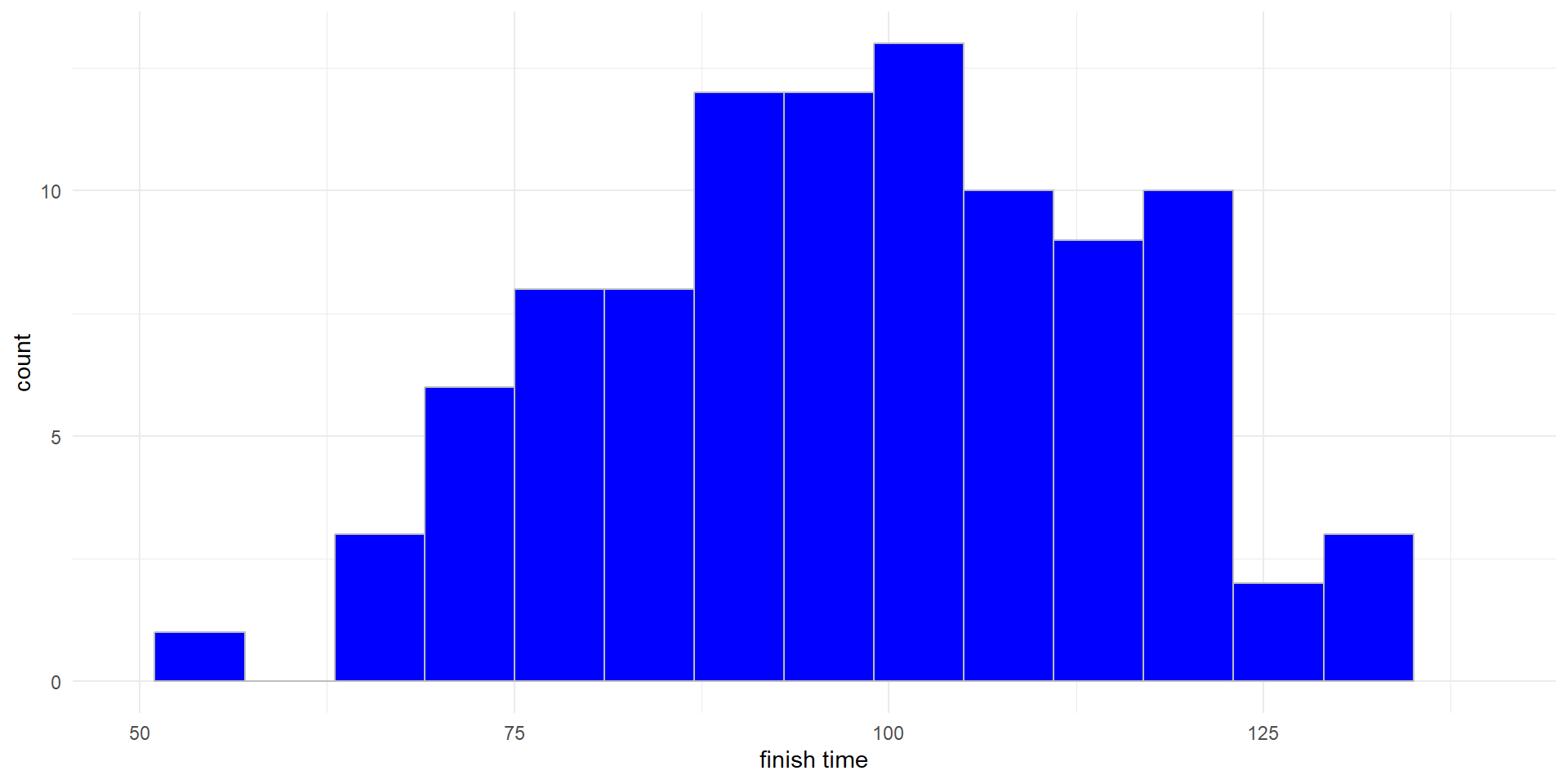
Inference: Single Mean
Chapter 19
Math 219
Math 219
Here are 5 bootstrapped means
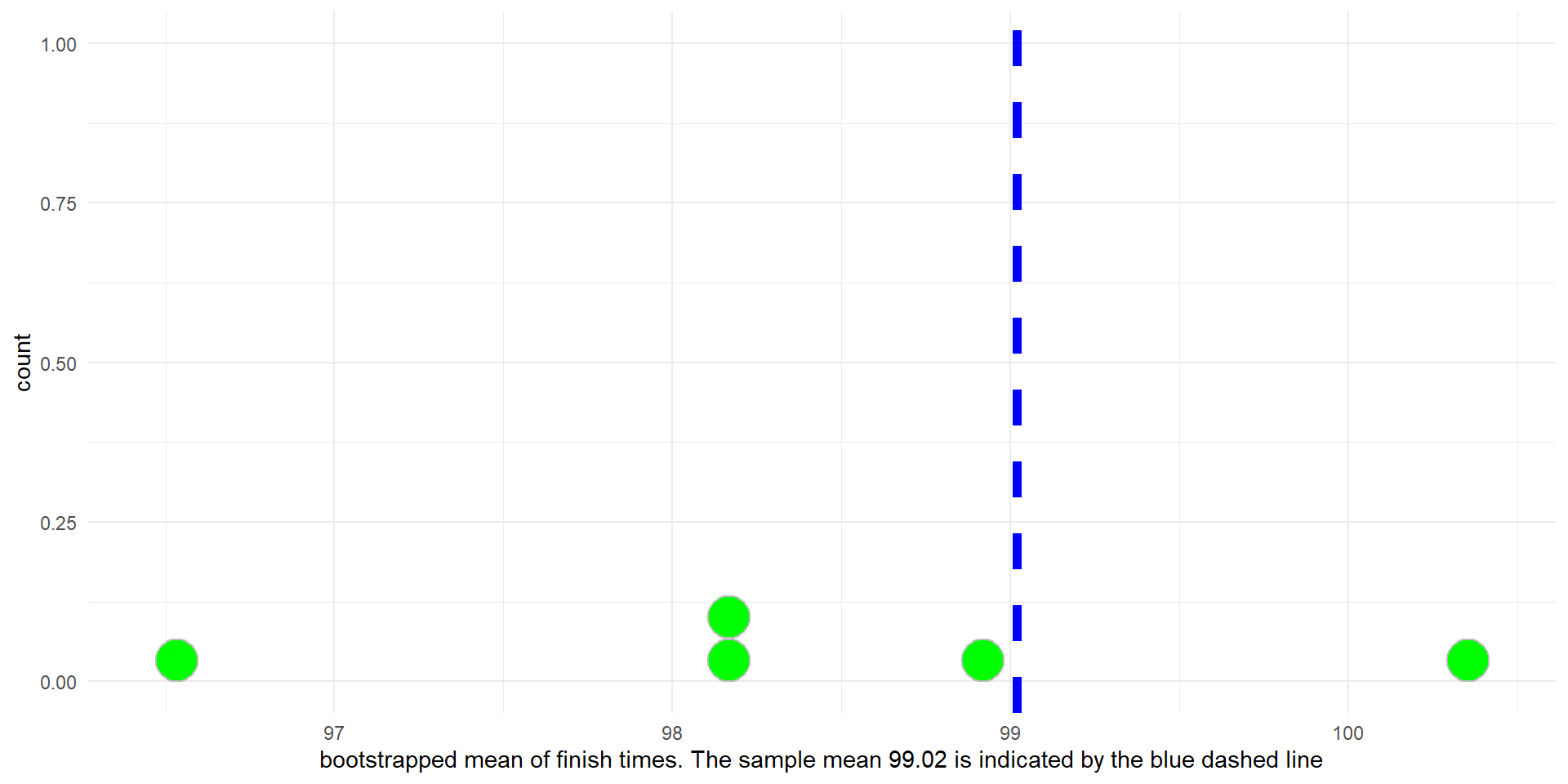
Histrogram showing 5 bootstrapped means.
Here is the result of 1,000 bootstapped means.
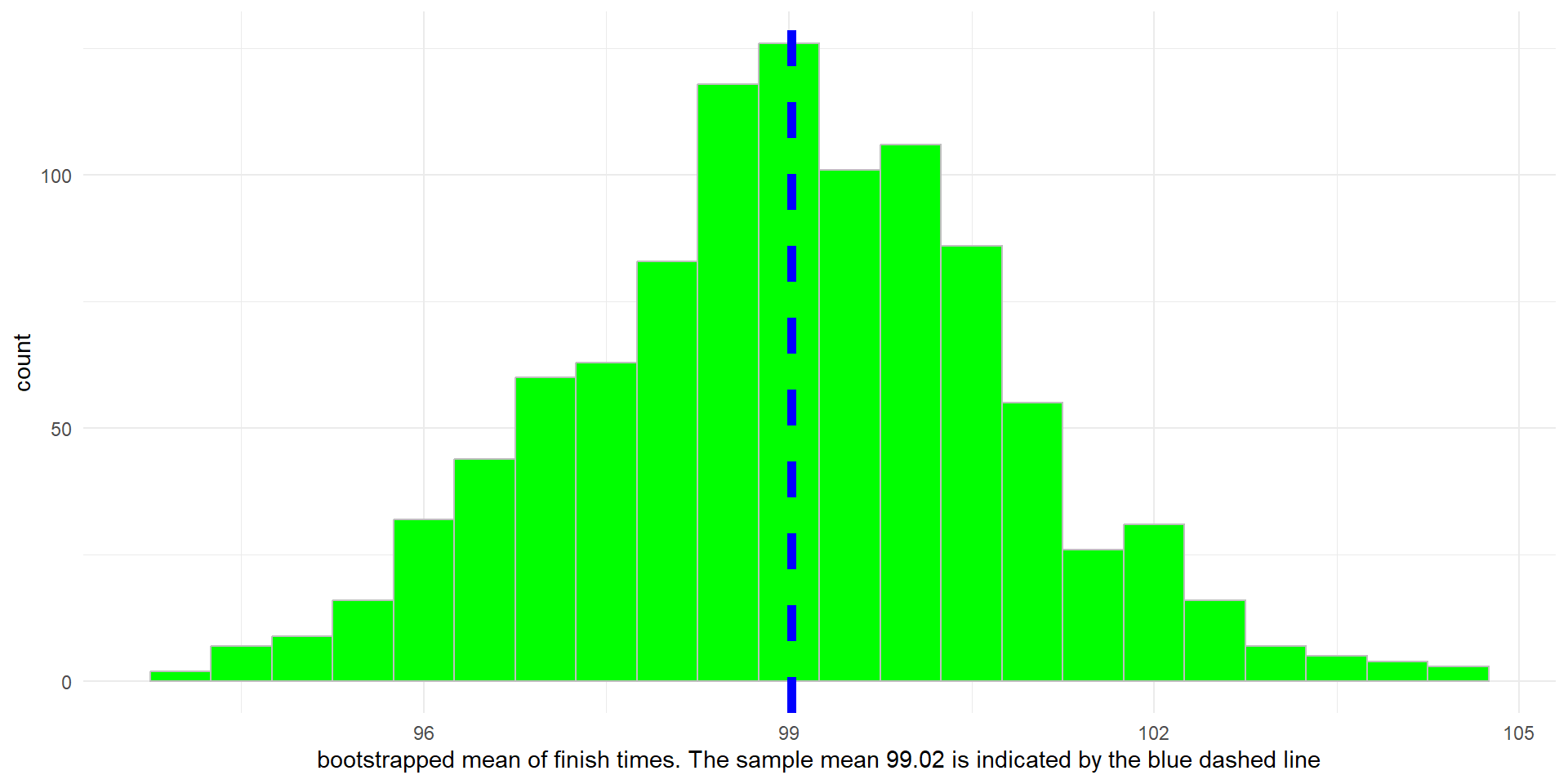
Histrogram showing 1,000 bootstrapped means.
Variability in the data vs variability of the mean
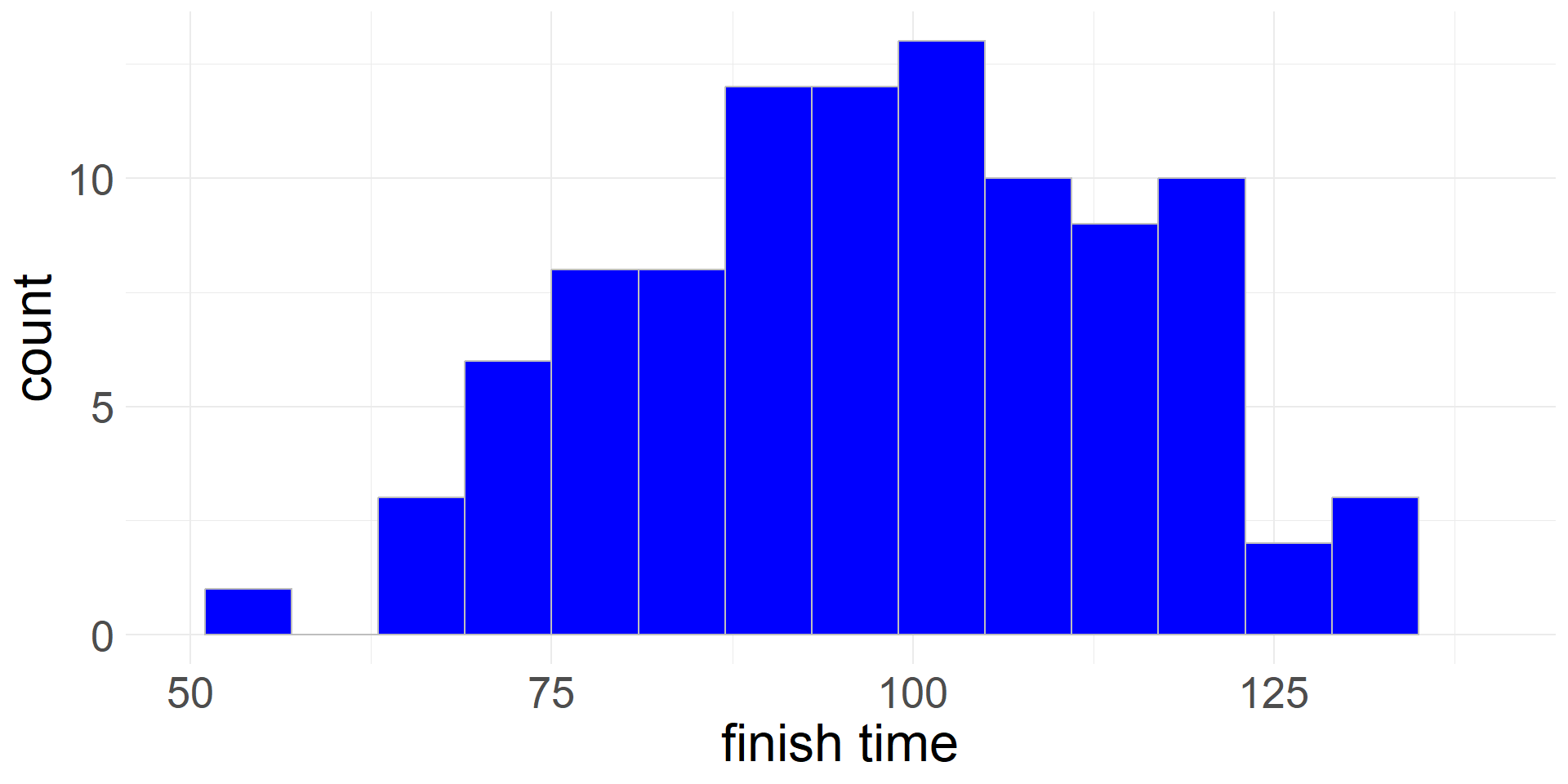
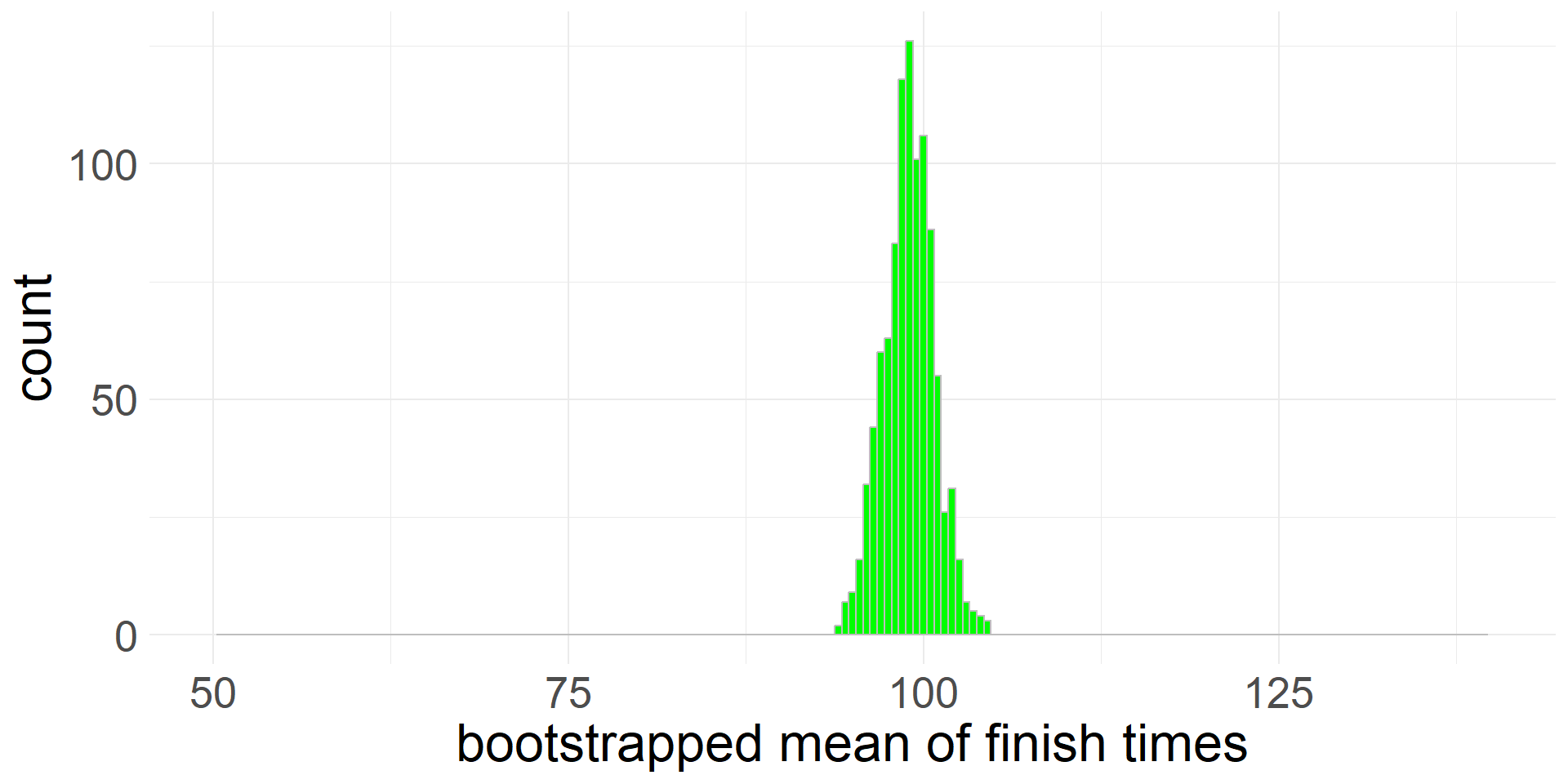
- The standard deviation of the means (1.78) is the value of the standard error(SE)
- Note that \(1.78\approx \frac{17.9}{\sqrt{100}}\)
Bootstrap Percentile CI for the Mean
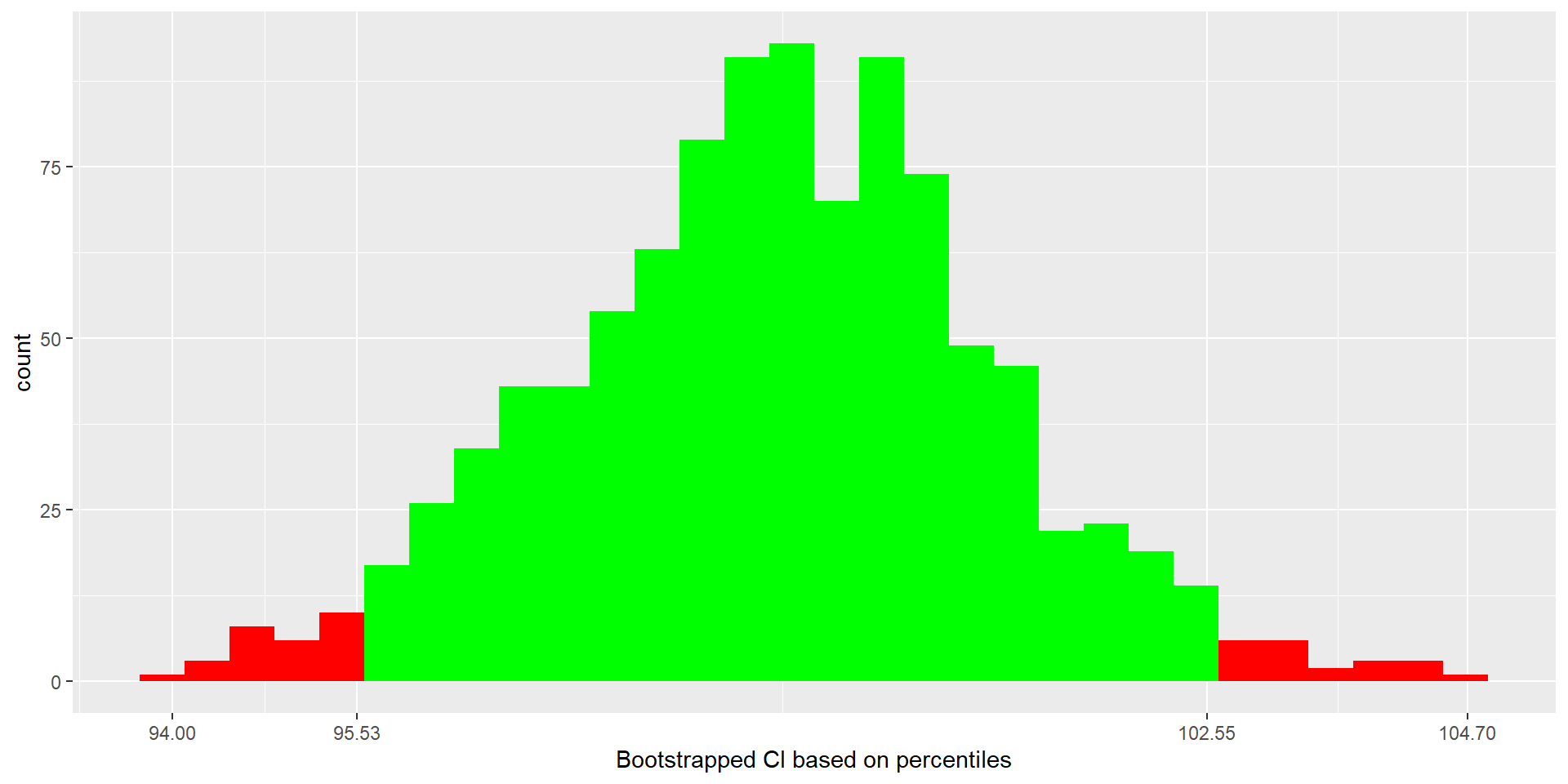
- The Cherry Blossom run data satisfy the normality check, since there are 100 (\(\geq 30\)) observations, and no particularly extreme outliers
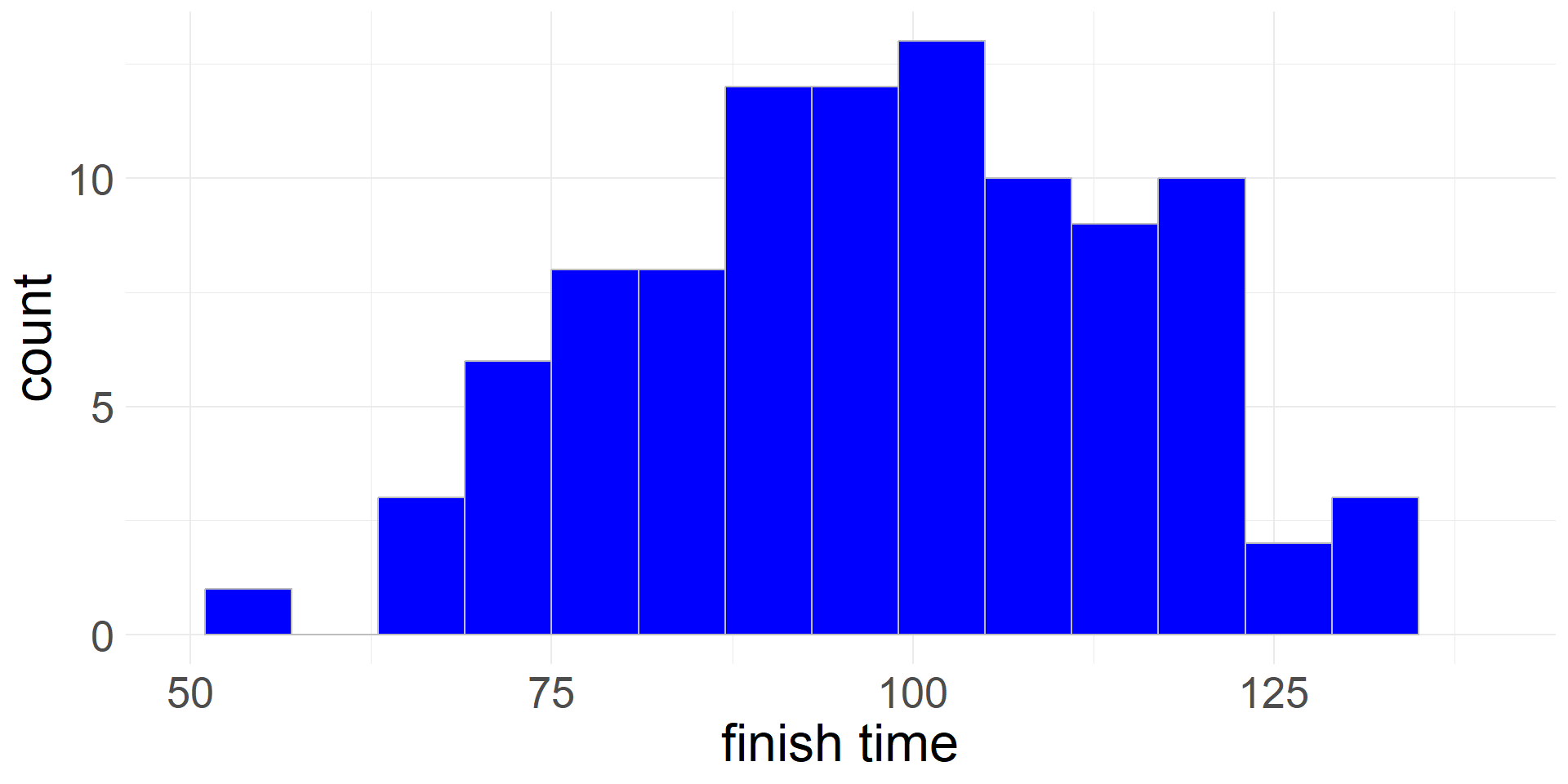
- The observations are independent, because they come from a simple random sample (SRS) of finishers
- The tails of the \(t\)-distribution are thicker than the normal distribution due to uncertainty in the SE estimate
- This is especially true for smaller samples
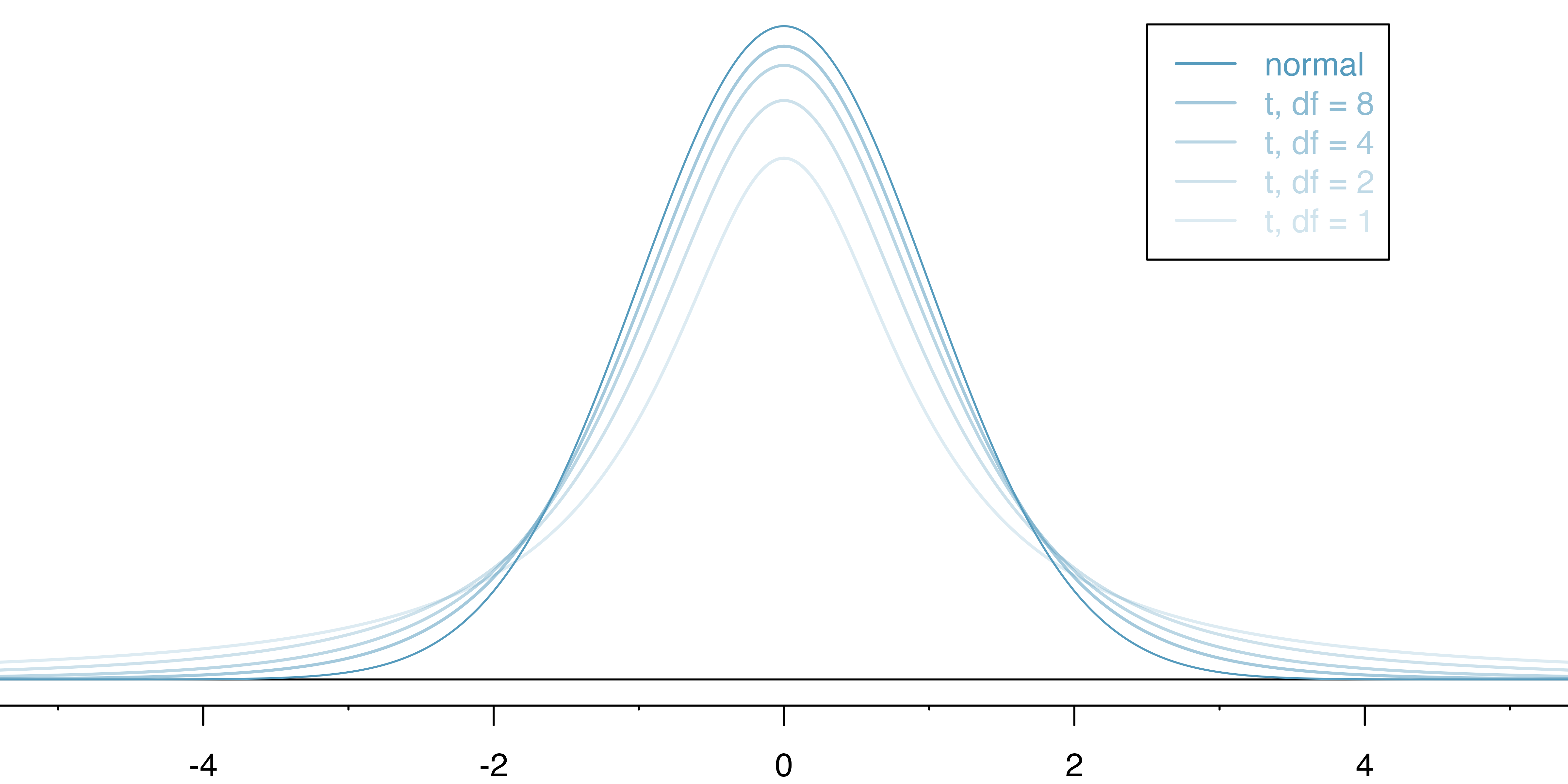
Comparison of normal distribution and \(t\)-distributions with different degrees of freedom (IMS2 Figure 19.9).
- We find the area in the left tail using
ptand double it (the t-distribution is symmetric)
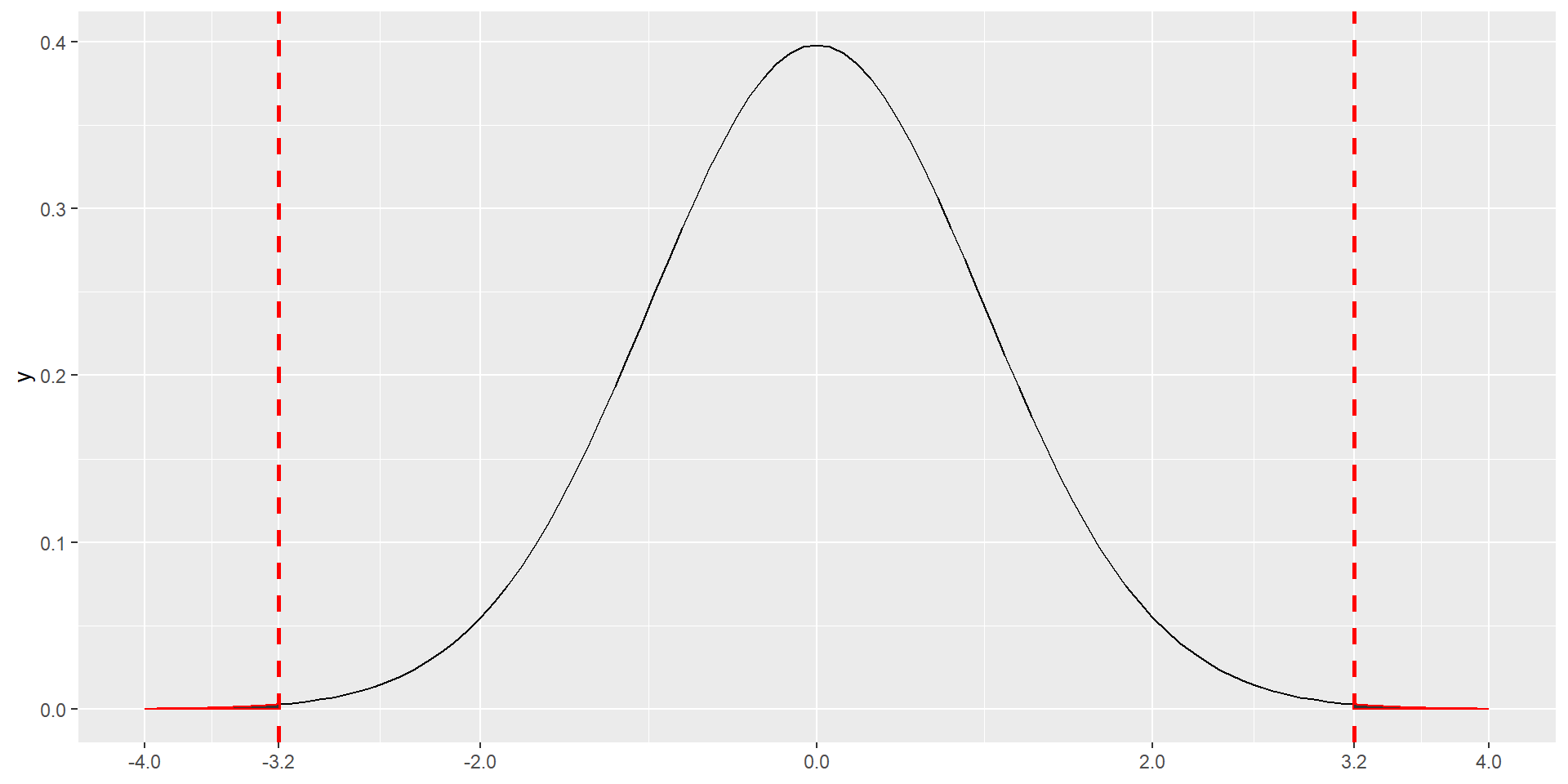
t-distribution with 99 d.f.