# A tibble: 2 × 5
  term        estimate std.error statistic  p.value
  <chr>          <dbl>     <dbl>     <dbl>    <dbl>
1 (Intercept)  -105.      7.54       -13.9 1.50e-37
2 hgt 1.02 0.0440 23.1 2.83e-81Inference: Regression Single Predictor
Chapter 24
Math 215
Math 215
Regression Line
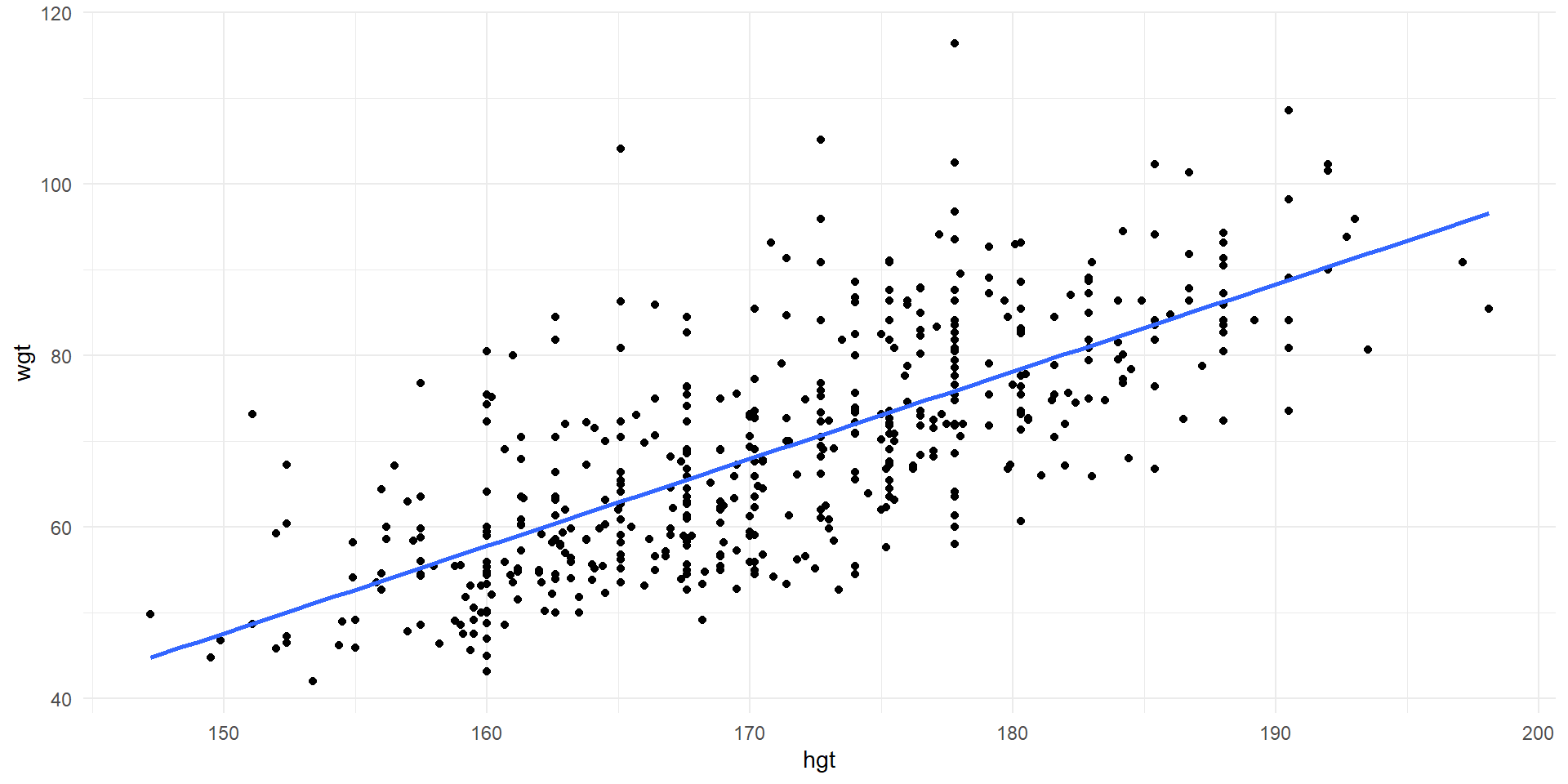
Observations of wgt vs. hgt and least squares line for the entire population.
- Least squares regression line \[\widehat{Weight}=-105.01+1.02\times Height\]
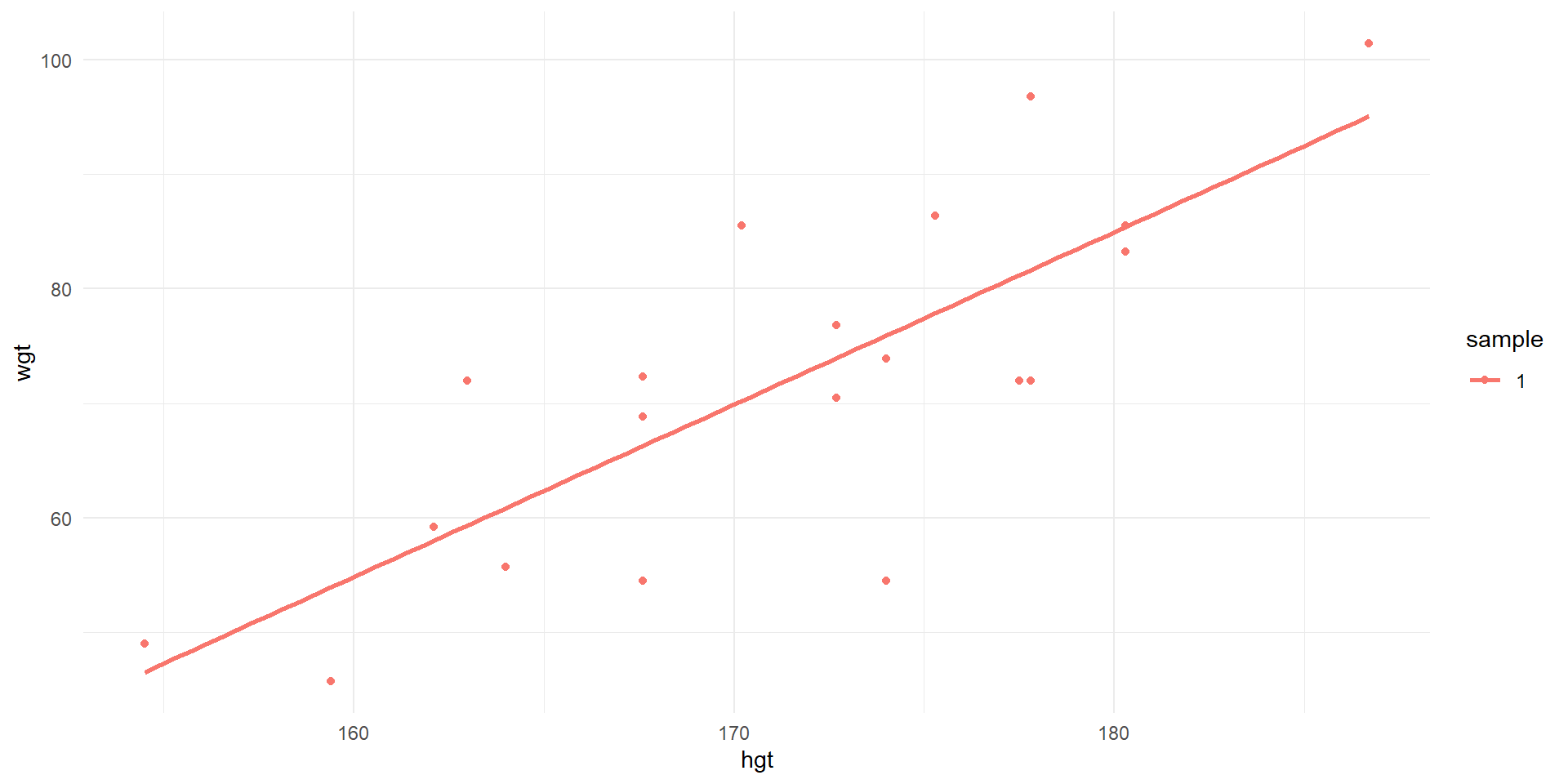
Observations of wgt vs. hgt and least squares line for first sample of 20.
Sample 1
# A tibble: 2 × 5
  term        estimate std.error statistic   p.value
  <chr>          <dbl>     <dbl>     <dbl>     <dbl>
1 (Intercept)  -186.      47.3       -3.94 0.000964
2 hgt             1.51     0.276      5.46 0.0000346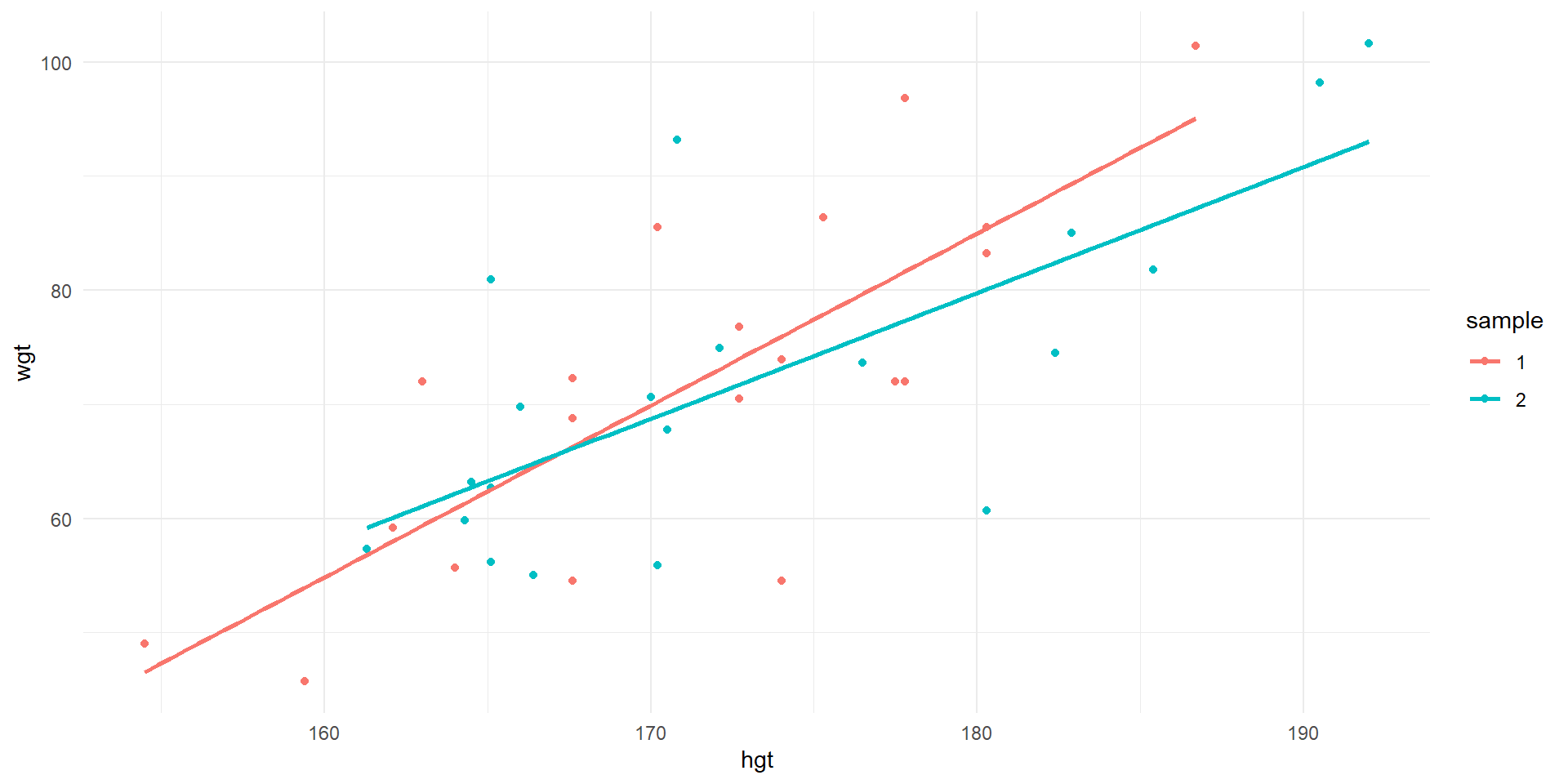
Observations of wgt vs. hgt and least squares lines for first two samples of 20.
Sample 2
# A tibble: 2 × 5
  term        estimate std.error statistic  p.value
  <chr>          <dbl>     <dbl>     <dbl>    <dbl>
1 (Intercept)  -119.      42.8       -2.77 0.0125
2 hgt             1.10     0.247      4.47 0.000299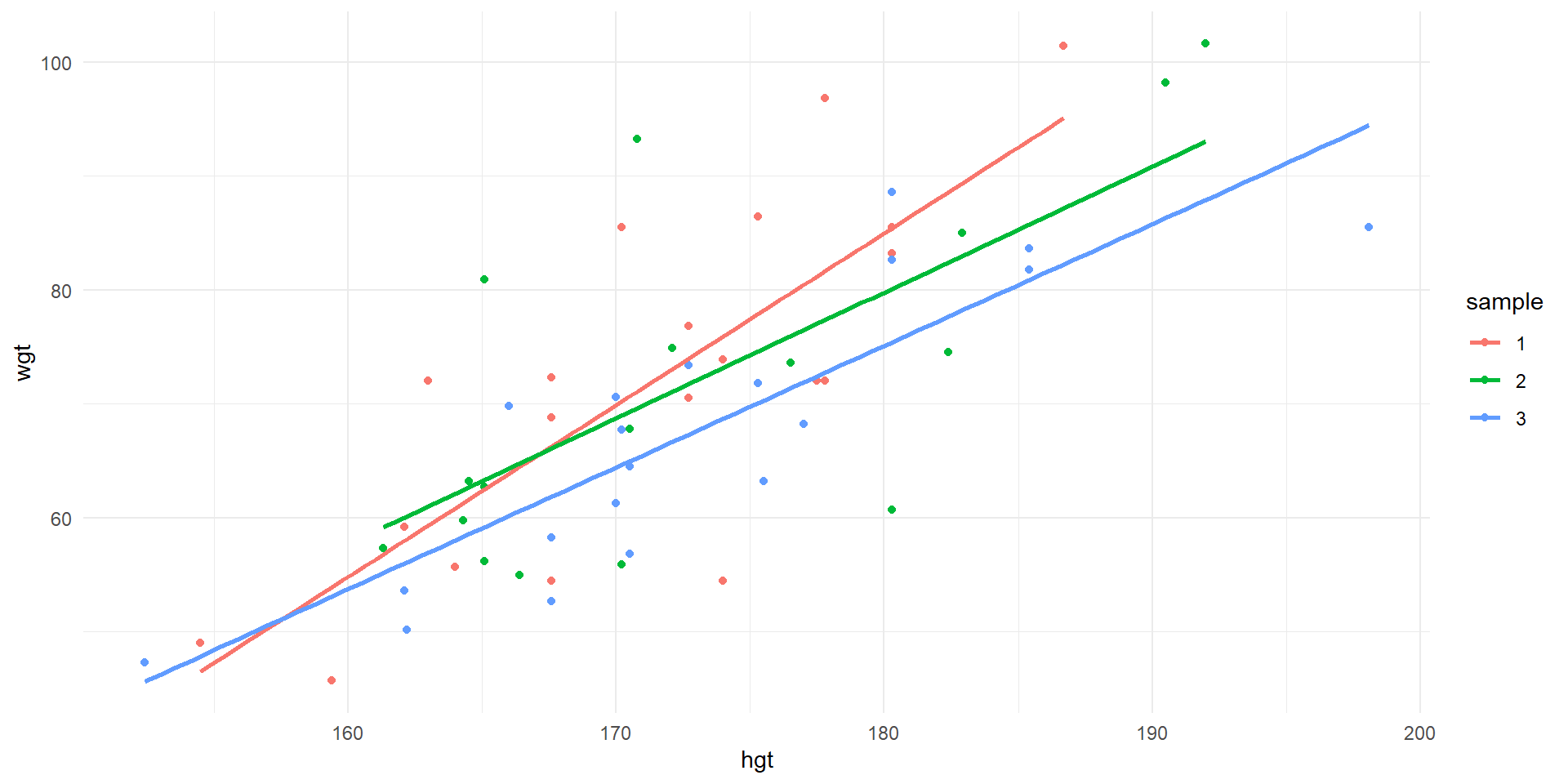
Observations of wgt vs. hgt and least squares lines for first three samples of 20.
Sample 3
# A tibble: 2 × 5
  term        estimate std.error statistic    p.value
  <chr>          <dbl>     <dbl>     <dbl>      <dbl>
1 (Intercept)  -117.      26.2       -4.46 0.000299
2 hgt             1.07     0.151      7.05 0.00000140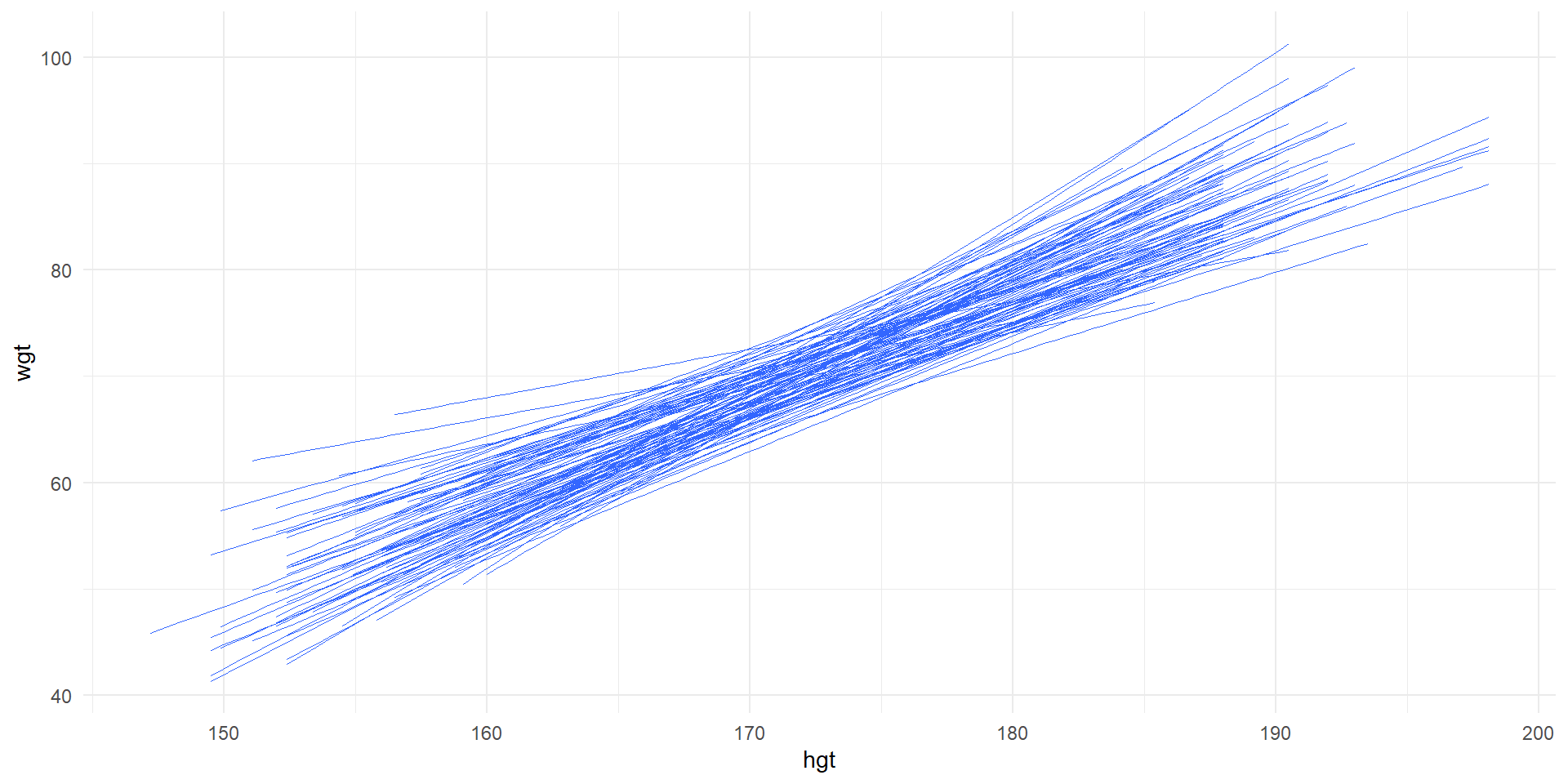
Least squares lines for 100 random samples of 20.
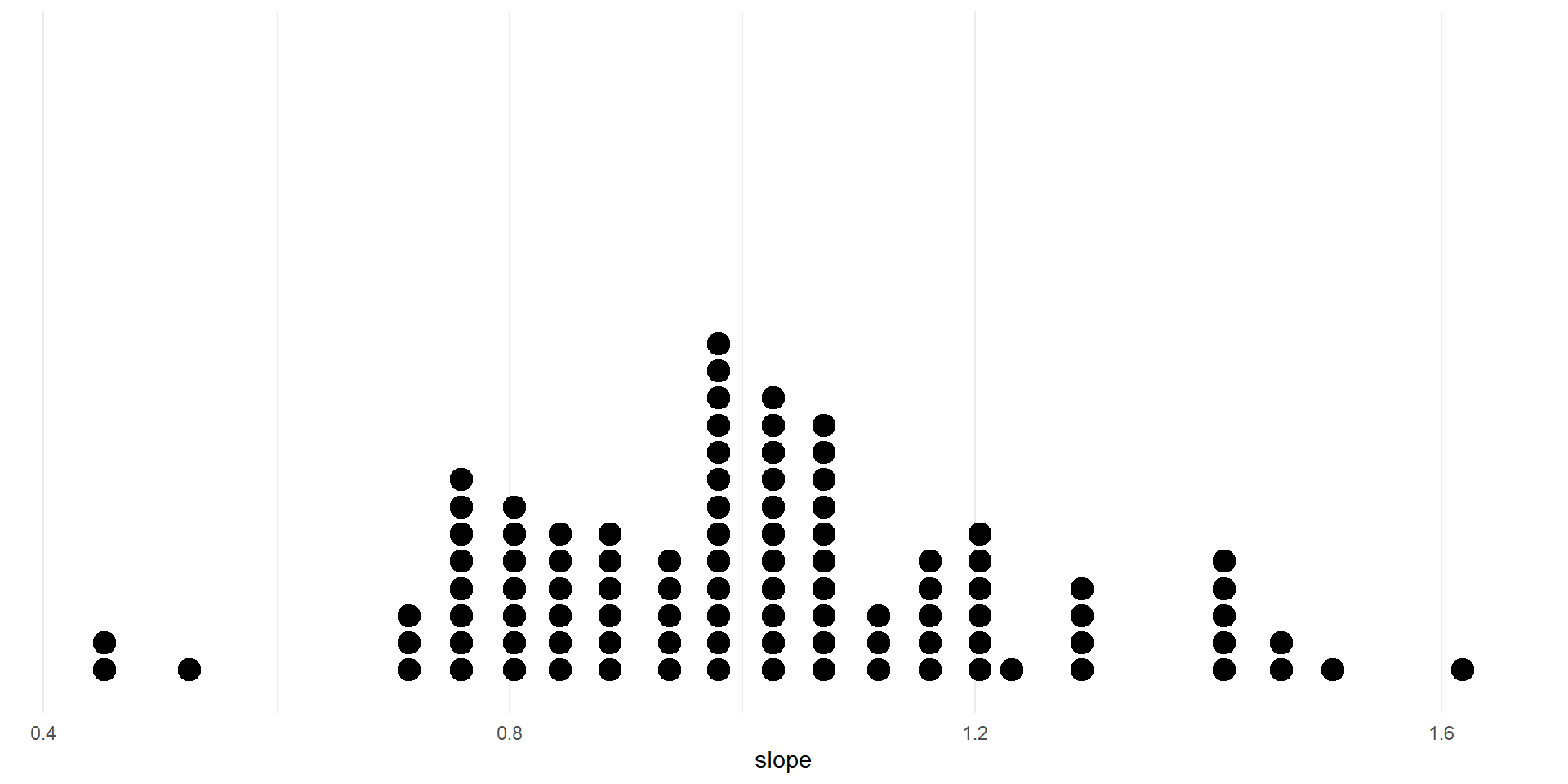
Dotplot of slopes of least squares lines from 100 random samples.
# A tibble: 1 × 3
      n  mean    sd
  <int> <dbl> <dbl>
1   100  1.01 0.221
We can form a 95% bootstrap CI for the slope:
# A tibble: 1 × 2
  ci_lo ci_hi
  <dbl> <dbl>
1 0.606 1.46Checking Conditions
Linearity? Independent observations? Normality of residuals? Constant variability?
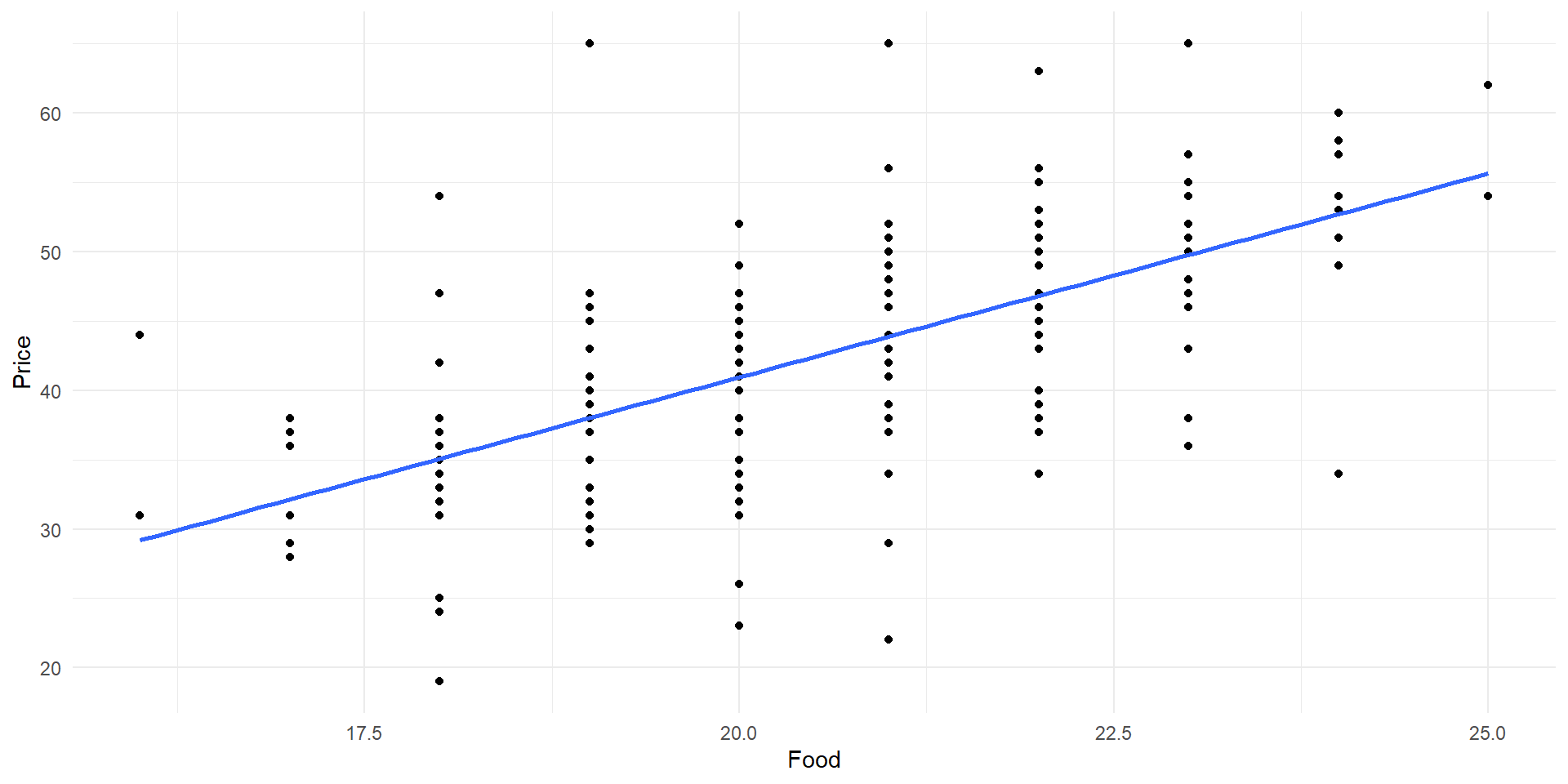
Scatter plot of Price vs Food with least squares line.
Checking Conditions
Linearity? Independent observations? Normality of residuals? Constant variability?
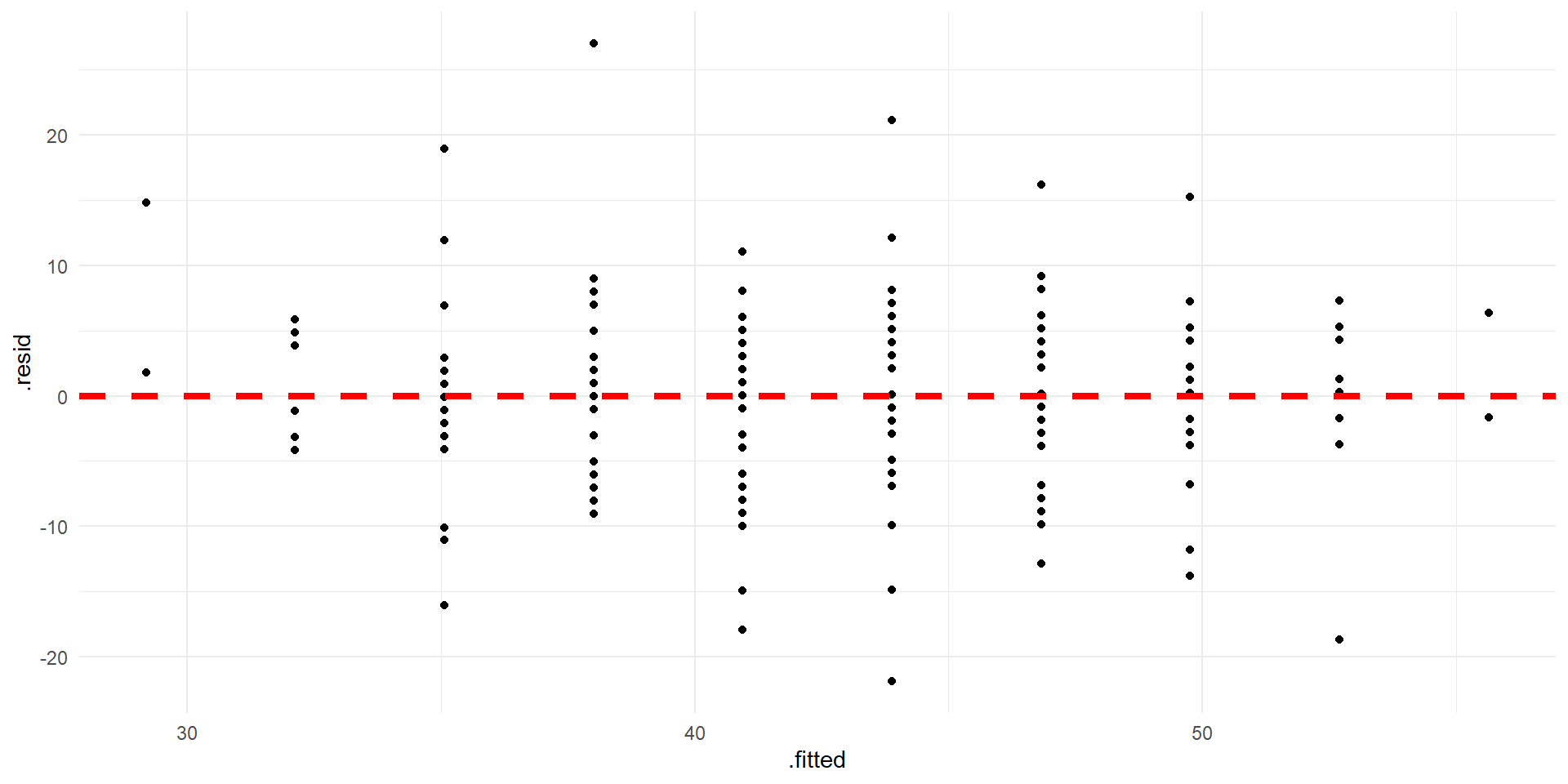
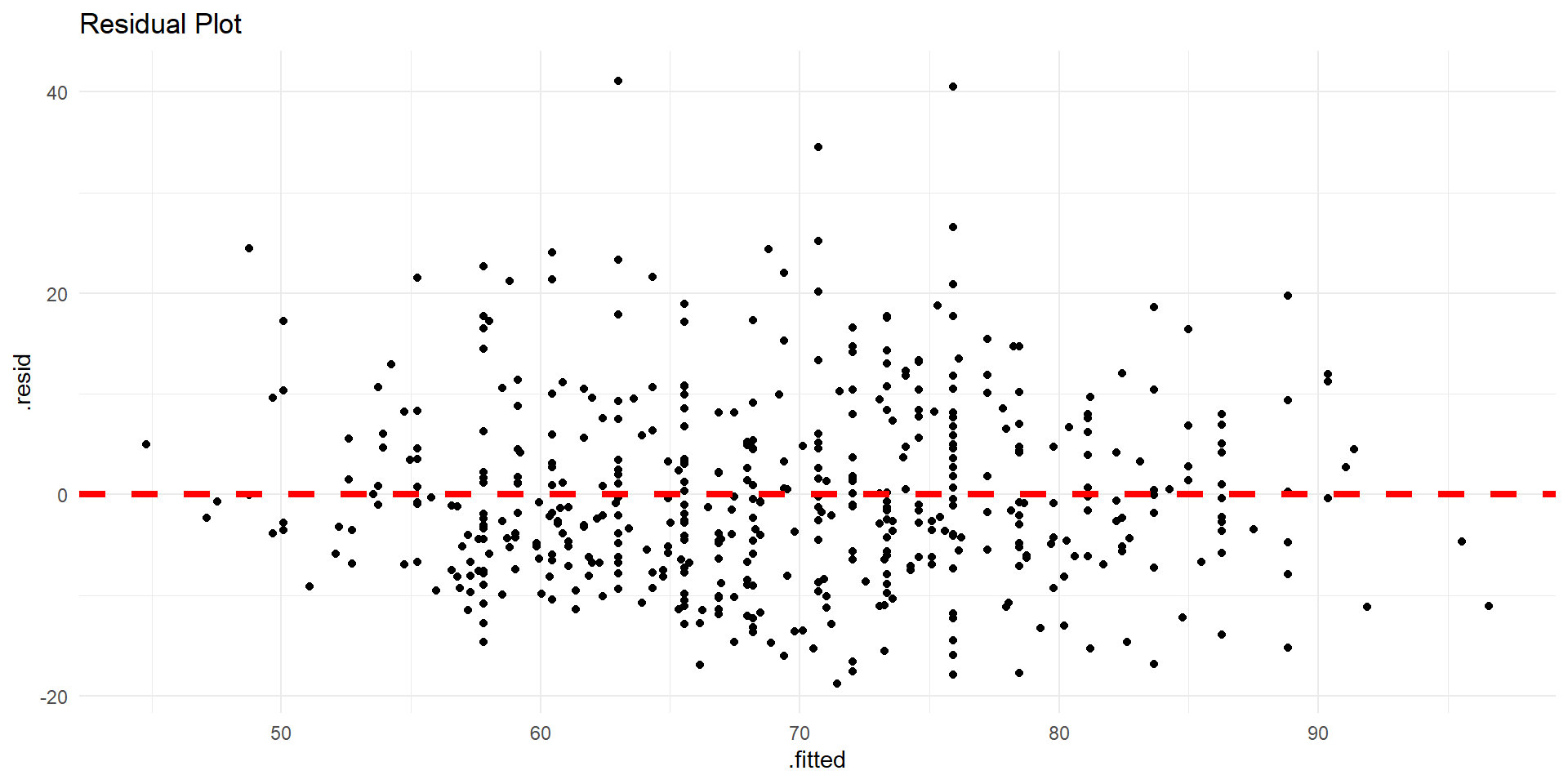
Residual plot.
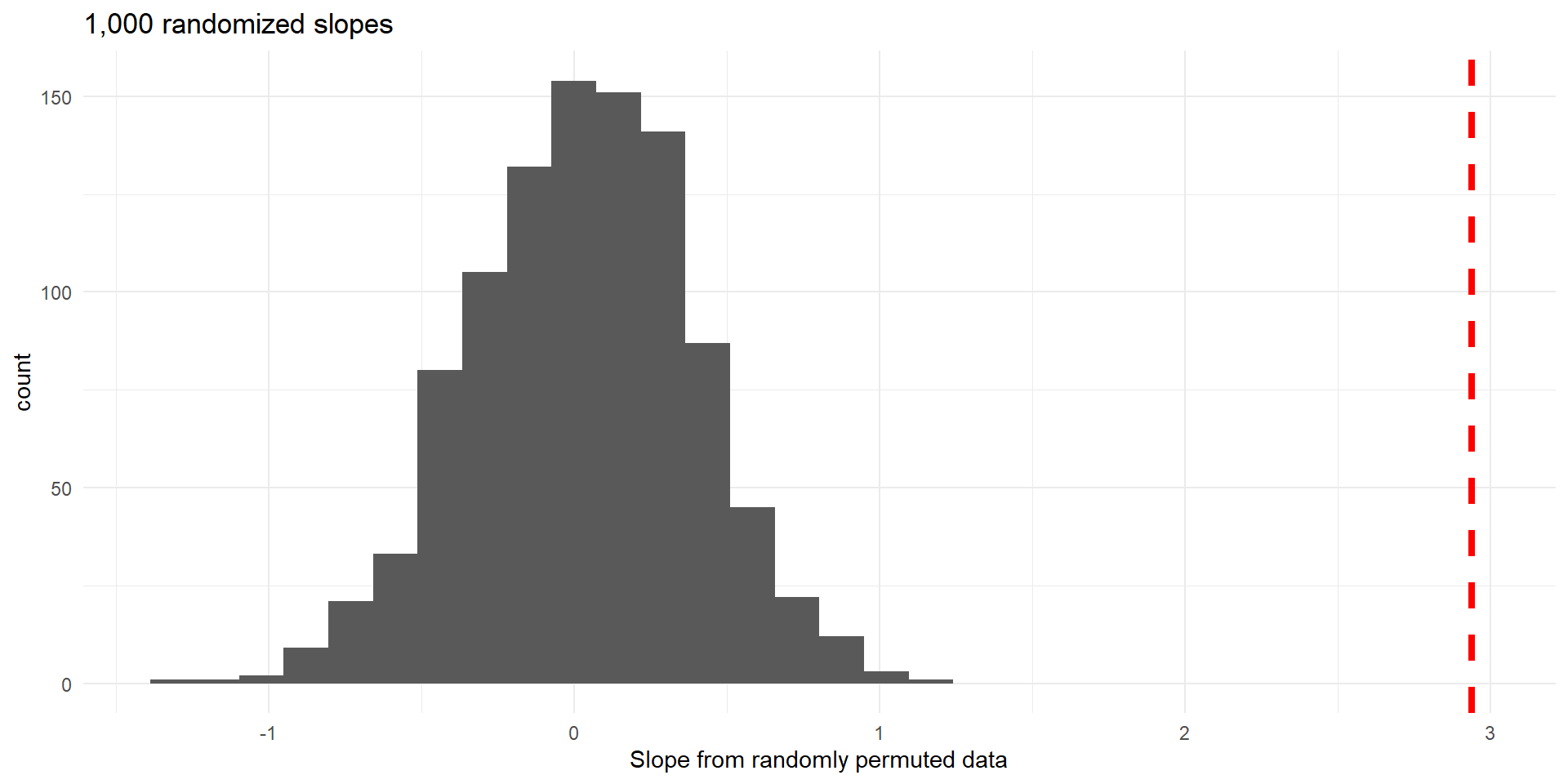
Histogram of slopes from different random permultations of Price (null distribution).
p-value \(\approx0\)
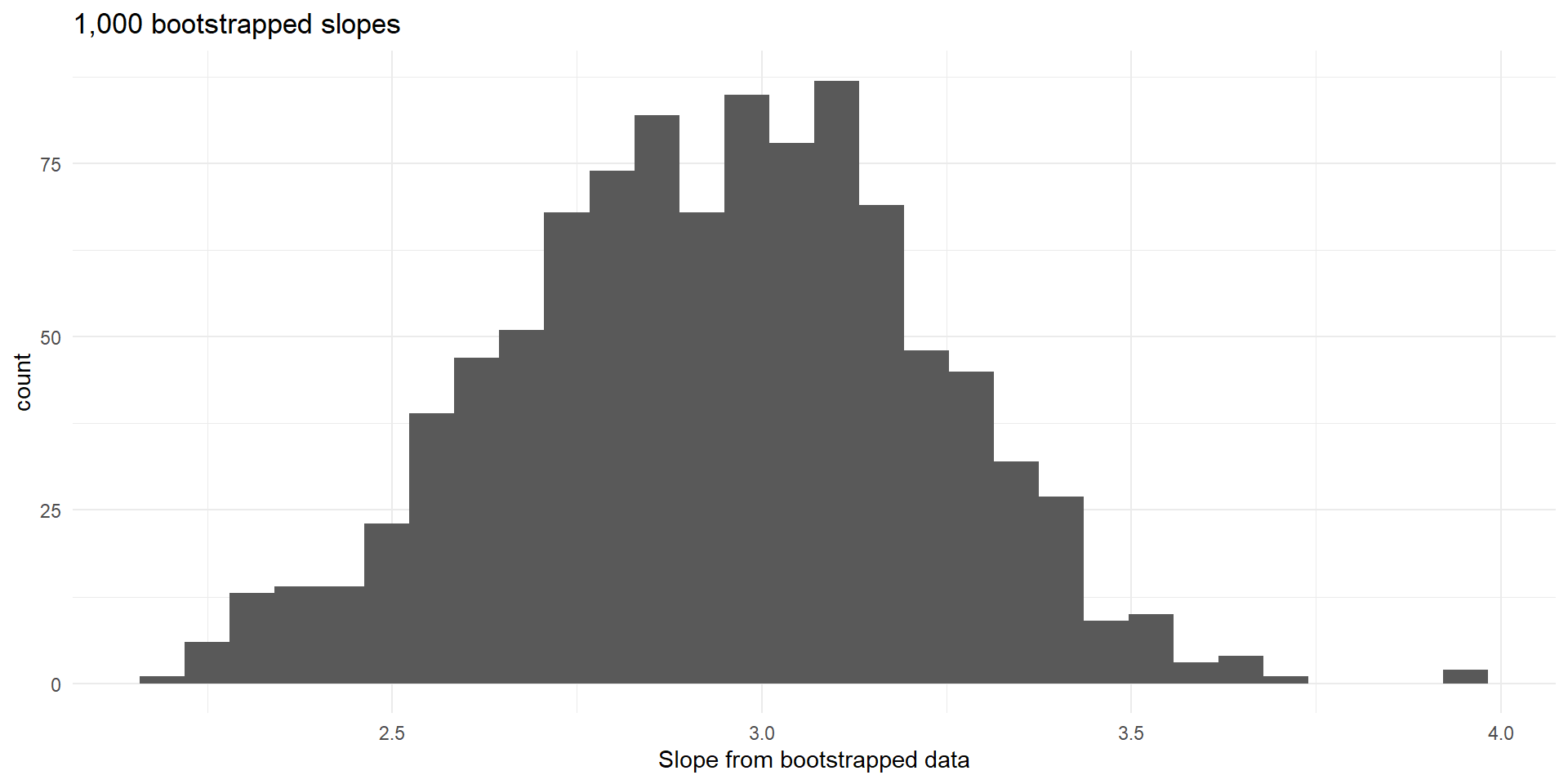
Histogram of slopes from bootstrapped data.